Moving into a one-bedroom apartment in Manhattan’s Chinatown in 2024 showed how tight square footage can shape daily life. The architect had carved out a hybrid entry and dining zone next to the kitchen, leaving little room for a classic living room.
They found that choosing the right sofa and minimalist pieces made a dramatic difference. When a bedroom and living area shared the same footage, selective furniture choices helped keep the space airy and cohesive.
These ideas focused on practical layout moves and scale-conscious selections. The goal was simple: make a cramped room feel larger, brighter, and more functional without sacrificing style.
In short, prioritizing compact pieces and clear sightlines let residents maximize every inch. The result felt more open and inviting, even in a small New York unit.
The Philosophy of Small Space Living
Smart living in tight quarters depends on seeing an apartment as an efficient system, not a constraint. This mindset shift turns every decision into a design choice that serves purpose and beauty.
Designers note that living in compact spaces is an exercise in intent. Each piece must earn its place. If an item does not add function or joy, it gets reconsidered.
Focus on flow to keep the room clear and uncluttered. Arrange pieces to allow easy movement and visual breathing room. That strategy makes a small space feel larger and calmer.
Practical rules help: choose multipurpose items, limit duplicate storage, and favor open silhouettes. Good planning shows that living in small spaces is not sacrifice, but smart design that boosts daily utility.
- Prioritize purpose in every purchase.
- Arrange for clear sightlines and traffic flow.
- Embrace pieces that do double duty.
Why Low Profile Furniture Apartment Styles Work
Design choices that lower the visual center help a small room feel more expansive. Anki Linde and Pierre Saalburg of LSL Architects used daybeds in a Paris pied à terre to prove this. The technique trades vertical bulk for a broad, horizontal plane that the eye reads as open space.
The Impact of Seat Height
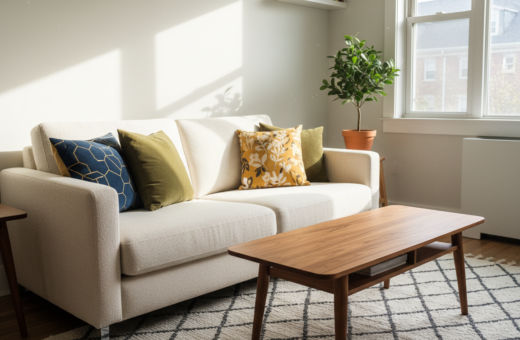
Seat height shapes how people perceive scale. When a sofa and coffee table share a similar height, they form a continuous line. That horizontal plane stretches the living room visually and makes movement feel easier.
Choosing the right seat height also affects comfort and function. The correct seating lets a home retain style without sacrificing usability.
Enhancing Sightlines
Keeping pieces closer to the floor preserves views across the floor toward the wall and windows. This prevents furniture from blocking light or sightlines and keeps the overall look clean.
“A consistent horizon across seating and tables creates calm and openness,” said designers at LSL Architects.
- Match sofa and coffee table heights for cohesion.
- Use compact tables to maintain clear sightlines.
- Pick each piece furniture with both function and look in mind.
Mastering the Art of Measuring Your Room
Start every project by mapping the space to see what truly fits. A clear plan that marks every window, door, and wall outlet prevents mistakes before they happen.
Accurate measurements of the apartment form the design foundation. Measure length and width and then double-check diagonals to catch irregular shapes.
Sketch the layout on graph paper to test how each piece of furniture will interact with the floor area. Move cutouts of sofas and tables on the sketch to try different arrangements.
Measure vertical space from floor to ceiling. That check ensures tall shelving or bookcases will fit without hitting a light fixture or molding.
Create a detailed map of the home to flag obstacles such as radiators, switches, or baseboard heaters. Knowing these locations helps place pieces where they won’t block vents or access points.
Quick checklist:
- Mark windows, doors, and outlets.
- Record floor dimensions and ceiling height.
- Sketch with scale on graph paper.
- Note radiators and wall-mounted fixtures.
Establishing Proper Traffic Flow
A clear circulation plan makes daily routines in a small home feel natural and unforced. Start by tracing paths from the entry through the room to the kitchen and other key zones.
Measure for comfort. Mark main walkways on a scaled plan with 30 to 36 inches of clearance. Smaller gaps, such as between seating and a table, should aim for at least 18 inches.
Accounting for Door Swings
Doors change how a layout works. Note swing arcs on the floor plan so a door never collides with a chair or blocks a passage.
Practical checks:
- Keep the path from the kitchen to the living area free of bulky pieces so traffic flows easily.
- Place taller items against a wall to protect sightlines and avoid tight turns.
- Test routes physically with tape or temporary markers before committing to a final placement.
Result: Thoughtful planning prevents the need to squeeze through tight spaces. A well-mapped layout keeps the floor clear and the home functional, even with limited square footage.
Selecting the Right Sofa for Your Living Room
The sofa anchors traffic, sightlines, and restful moments in any small room. A thoughtful pick balances comfort, scale, and style so the living space feels open and intentional.
Prioritizing Seat Depth
Seat depth matters. A 43-inch seat depth offers maximum comfort and makes the sofa perfect for lounging or a mid-day nap in a compact space.
This depth works well when paired with a low coffee table or side table so the horizon line stays consistent across the room.
Choosing Streamlined Cushions
Sleek, supportive cushions keep the look modern and the seating usable. Narrow seams and thin arms reduce visual bulk and keep the living area airy.
Wood-block feet lift the piece furniture slightly, creating light under the frame and a cleaner floor plane.
Benefits of Armless Designs
Armless sofas save inches and widen sightlines. They let guests move around easily and pair well with storage ottomans or sofas that hide blankets and pillows.
- Select a sofa within 2–4 inches of other seating height to keep a cohesive look.
- Use hidden storage to stash pillows and reduce clutter.
- Match the sofa’s scale to the wall and nearby tables for balanced style.
Incorporating Multifunctional Pieces
A well-chosen multipurpose piece can change how a small home feels and functions.
Multifunctional furniture stretches limited square footage by blending uses. A lift-top coffee table becomes a daytime desk. An ottoman adds storage and extra seating while hiding pillows and blankets.
Investing in convertible sofas makes hosting a guest simple without a spare bedroom. Expandable dining tables stay compact during the day and grow for dinner. These choices support a modern lifestyle and smart design.
“With the multifunctional furniture market nearing $15.9 billion in 2024, versatility is now core to small-space living.”
- Lift-top table: doubles as a desk for work or meals.
- Storage ottoman: seating, footrest, and hidden storage.
- Convertible sofa: sleep space for guests without extra rooms.
- Expandable dining: compact by day, roomy for nights.
These pieces reduce clutter on the floor and keep sightlines clean. Thoughtful selections help small spaces feel open, useful, and ready for daily life.
The Benefits of Modular Furniture Systems
A modular approach gives residents the power to reconfigure seating for work, play, or guests. Modules snap together like building blocks, so the living area can change in minutes without a full redesign.
These systems help people who move often. A modular sofa breaks down into lightweight pieces that are easier to carry up stairs or through a narrow hall.
Built-in storage is another major plus. Many modules hide drawers or lift-up compartments, so residents keep the room tidy and uncluttered.
- Start with a core set and add modules later as needs shift.
- Rearrange pieces to create more seating for a guest or open floor for activity.
- Choose modules with hidden storage to clear clutter fast.
Result: A modular system extends lifespan and functionality. It supports evolving routines and keeps a compact home flexible and organized.
Creating Visual Lightness with Materials
Materials matter when the goal is to make a compact room feel airy. Choosing transparent and reflective surfaces reduces visual weight and keeps sightlines open.
The Role of Glass and Acrylic
Glass and acrylic tables let light pass through, so the floor and other pieces remain visible. A clear coffee table or side table creates an illusion of space without removing usable surfaces.
These materials also work well with light-colored wood like birch or maple to keep the overall look soft. Placing books or florals on a transparent side table adds color without the heaviness of solid pieces.
Reflective Mirrored Surfaces
Mirrored accent tables and polished surfaces bounce natural and artificial light around the room. That reflection increases perceived depth and brightens darker corners.
- Glass or acrylic coffee and side tables keep the floor visible and uncluttered.
- The small space furniture market, valued at 23.4 billion USD in 2023, shows demand for visually light materials.
- Light wood choices sustain an airy look compared with heavy dark woods.
For ideas on arranging these materials to optimize sightlines and day-to-day use, see this guide on making a small living space feel more open: how to make a small apartment feel airy &.
Finding the Perfect Scale for Your Home
Getting scale right starts with one decisive anchor item and thoughtful supporting pieces. Choose an apartment-sized sofa or a similar anchor that sets the visual rhythm. Then add smaller items so the room reads as a unified whole.
They should avoid the dollhouse effect. Filling a space with only tiny items can make the look chaotic rather than cozy.
Legs on furniture matter. Pieces with raised legs keep sightlines clear and let light move under the frame. That small change makes the entire home feel more expansive.
Select one properly scaled accent piece to anchor one corner or a focal wall. The right accent preserves function and gives the room a clear style without crowding it.
- Anchor wisely: start with a main piece and add complementary pieces.
- Keep sightlines: prefer raised designs to open the floor plane.
- Balance scale: avoid many tiny items that compete for attention.
Designers agree that correct scale is the secret to a deliberate, calm environment. When height and proportion are considered, each piece furniture contributes to a cohesive, usable room.
Maximizing Storage Through Verticality
When square footage is tight, thinking vertically unlocks hidden storage and improves sightlines. Vertical systems expand capacity without crowding the floor. That approach keeps a room airy while holding essentials.
Tall, narrow pieces and mounted systems turn blank walls into organized zones. They draw the eye upward and make the whole space feel larger.
Utilizing Wall Mounted Shelving
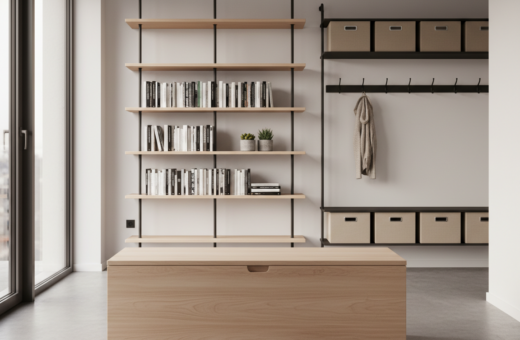
Wall mounted shelving and ladder-style units save floor area and display items neatly. Floating shelves keep the floor clear and create a minimalist look for a small home.
- Use tall, narrow bookshelves or wall shelves to draw the eye up in a compact room.
- Ladder-style shelves store books and plants without taking valuable floor space in your apartment.
- Integrate storage under beds or inside seating to tuck away blankets and pillows.
- Minimalist storage is growing at a 9.8% CAGR, pushing more people toward vertical solutions for small spaces.
Result: Vertical shelving increases storage capacity and preserves clear sightlines, helping a compact room stay tidy and welcoming.
Using Rugs to Define Your Living Space
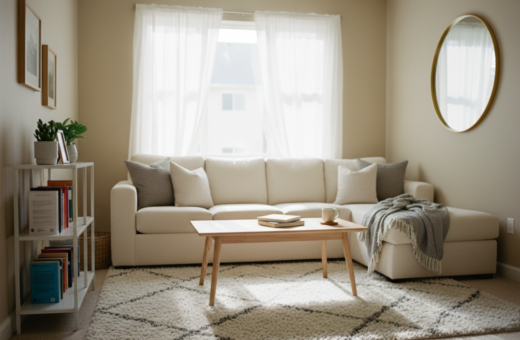
A well-chosen rug can instantly carve out a distinct living area within an open floor plan. A solid-colored rug is the simplest way to define a living room zone and bring seating together into one cohesive group.
The right size matters. Choosing an 8’x10’ or 9’x12’ rug ensures chairs and the sofa sit comfortably on the surface so the collection reads as a single unit. This grounding prevents the room from feeling scattered.
Texture adds calm. Natural jute or a soft viscose rug brings subtle tactility that deepens a serene vibe without overpowering color or pattern.
A rug also anchors the layout and gives visual stability. Proper placement—front legs on the rug or fully on depending on the room size—creates a clear boundary and makes the living room feel intentional and organized.
- Solid color: unifies seating and reduces visual clutter.
- Correct size: 8’x10’ or 9’x12’ to ground the group.
- Material: jute or viscose for a quiet, textured floor.
- Placement: use consistent rules so the space reads as one zone.
Selecting Coffee Tables for Airy Vibes
A well-chosen coffee table can set the tone for an open, airy living area. The right shape and scale help the entire room feel longer and lighter.
Choose a narrow or oval table to elongate the visual plane and keep traffic smooth. These shapes reduce hard corners and let the eye travel across the space with ease.
Pay attention to height. The table should be no more than four inches lower than the sofa seat for comfort. That rule keeps use practical while preserving a continuous horizon in the room.
- Material choices: a light birch-veneered table or a rough-hewn mango-wood piece adds texture without heaviness.
- Leg details: slender brass legs give a delicate mid-century modern vibe and keep the center visually open.
- Pairing: use a small side table when extra surface is needed so the main coffee table can stay unobtrusive.
Proper selection ensures the living room stays functional and free of bulky furniture pieces. Thoughtful coffee tables lift the vibe while letting the room breathe.
Visualizing Your Layout Before You Buy
Testing arrangements digitally removes guesswork and helps choose the best layout for daily living. RoomGenius and similar AI tools let users upload a photo and place virtual pieces to see scale, flow, and light.
Before purchasing, they can test how a new sofa will change the look and the traffic paths. The tool shows whether a sofa on tall legs opens the floor or if a desk will crowd a doorway in the apartment.
A quick mock-up also helps pick the right size for a coffee table and other tables so the group reads as one calm zone. Seeing iterations on-screen prevents costly mistakes and buyer’s remorse.
- Confirm a sofa fits without blocking flow.
- Try a desk placement to protect workday routines.
- Compare table sizes and matching pieces before the first day.
Result: A planned layout makes a home feel effortless and aligned to their lifestyle. Visualizing first saves time, money, and keeps the living space balanced.
Conclusion
A few deliberate choices can change how a small space works and feels. Transforming tight quarters starts with small, deliberate choices that add daily value.
Focus on purpose: choose pieces that serve multiple roles and keep sightlines open. This keeps the room organized and calm.
These design ideas help make an apartment feel airy and purposeful. They support a modern lifestyle without crowding the floor.
With the right scale, layout, and simple style moves, any home can feel bigger and more curated. Use these ideas as a practical roadmap to elevate living and refine your lifestyle.