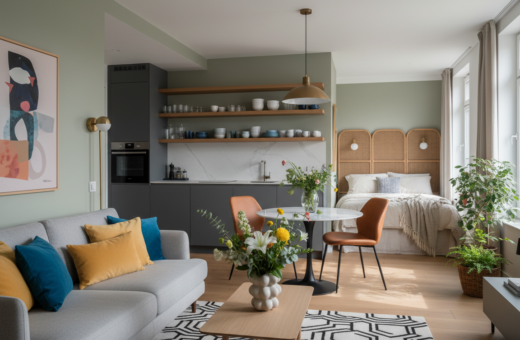
Living in a compact studio apartment can feel challenging, especially when square footage dips near 300. Yet thoughtful design can turn tight floor space into a calm retreat. Professional layout tips help define a sleeping area while keeping living, dining, and kitchen zones functional.
Transforming a small space starts with multipurpose furniture and clear color choices. They free up floor space and make the apartment feel larger. Designers recommend zoning without permanent walls to preserve light and flow.
Practical storage and lighting choices keep clutter away and set a peaceful mood. With 30 proven studio apartment ideas, anyone can craft a cozy, stylish room that supports daily life and rest. These strategies balance comfort with utility so the home looks intentional over time.
Defining Your Sleeping Zone
Defining a private sleep area gives a small apartment purpose and keeps daily life organized. A clear zone separates rest from work, cooking, and socializing. This creates a calm feel without building permanent walls.
Floating a bed away from the wall makes room for functional pieces behind it. Dan Mazzarini recommends placing a dresser behind the bed to form a mini dressing area. This trick turns the bed into a divider that still lets light pass through.
“Floating a bed with a dresser behind it creates a distinct sleeping nook.”
Using Furniture as Anchors
Anchor the bed with a rug and low shelving to mark the area on the floor. Arrange seating and dining pieces so they support the bed’s position and maintain flow across the living room and kitchen.
- Use a room divider or open shelving to define zones.
- Choose lighting that highlights the sleeping area and enhances privacy.
- Optimize layout to make best use of limited floor space.
Creative Studio Bedroom Corner Ideas
A. “Small living footprints call for bold, creative moves that turn a tight area into a restful retreat.”
Designers suggest using a defined nook to place the bed so the rest of the living room and kitchen stay open and functional. Choosing furniture to scale with the room helps circulation and keeps the space from feeling crowded.
Bold color or a single statement piece of art can make the sleeping area read like a separate room within the apartment. Accent lighting and layered textiles add warmth without using floor space.
To balance dining and living functions, pick slim-profile furniture and clear sightlines. An area rug and low shelving anchor the bed while preserving light and flow across the floor.
“A focused layout and personal touches make a small sleep nook feel like a true retreat.”
- Use color and art to define the area.
- Pick furniture that matches the scale of the apartment.
- Add lighting and textiles for comfort without clutter.
Utilizing Vertical Space for Storage
Maximizing wall height can add both function and a sense of airiness to a compact apartment. When square footage is tight, building up becomes the most effective way to keep floor space clear.
Installing Floating Shelves
Alexandra Gater advises that people with limited square footage should prioritize wall storage solutions. Floating shelves rank high among practical studio apartment strategies because they organize items without crowding the floor.
By using vertical storage, one can store books, decor, and daily essentials while preserving the main living room layout. Proper installation makes shelves safe and stylish, and when arranged to draw the eye upward, the space often feels taller and more open.
- Choose sturdy anchors rated for the weight you plan to hold.
- Mix closed boxes and open shelves to hide clutter and show décor.
- Customize shelf height to fit both storage and display needs.
“When floor space is limited, build up rather than out.”
Selecting Multifunctional Furniture
When every square foot counts, furniture that pulls double duty becomes the backbone of good layout and calm design.
Selecting multifunctional pieces is essential for any studio apartment that must balance a bedroom, living, and dining area. Choose items that fold, hide, or convert so the main space stays open during the day.
Daybeds and Sofa Beds
A daybed or a quality sofa bed lets residents move from daytime seating to a comfortable bed at night. These pieces free up floor area and improve flow between the kitchen and living zones.
Murphy Bed Solutions
Michael Chen of MKCA shows how a Murphy bed with a two-tone, paneled exterior can read like built-in furniture. When mounted into a wall, it saves significant floor space and hides the sleeping area so the home reads more like a living room.
- Hidden storage: look for drawers under seats or shelving behind panels.
- Quality construction: invest in durable mechanisms and finishes.
- Scale and seating: pick pieces that match the apartment layout and daily use.
The Power of Rugs in Open Layouts
Rugs are one of the simplest tools to define zones in an open plan. A well-placed rug creates a sense of purpose without building walls.
Placing a large rug under a bed or seating area visually grounds the furniture and ties elements together. Designers note that rugs separate a sleeping area from the rest of the apartment layout while keeping flow intact.
A good rug adds texture and warmth. It softens hard floors and makes the room feel more intentional. Renters benefit because rugs personalize the space without permanent changes to walls or fixtures.
“A large rug can make a small apartment appear roomier by creating continuity across the floor.”
- Use color that complements the overall palette to link zones.
- Choose a size that fits beneath both seating and a small table to create cohesion.
- Pick durable materials for high-traffic areas to get long-term value.
Strategic Lighting for Ambiance
Lighting does more than brighten — it sculpts perception of scale and comfort. In a small studio apartment, well-placed fixtures make the space feel layered and calm.
Devin Kirk recommends wall sconces in seating areas to avoid bulky floor lamps that eat into valuable floor space and square footage. Wall-mounted lights free the area for furniture and storage while adding visual height.
Layer light with a dimmable overhead, task lamps on a side table, and accent fixtures to highlight artwork or shelving. This approach draws attention to the best parts of the apartment and away from less flattering spots.
- Save floor space: use sconces and wall fixtures.
- Flexible mood: choose dimmers and adjustable lamps.
- Clear sightlines: avoid cluttering the room with tall lamps or bulky furniture.
“Layering light makes a small room feel larger and more intentional.”
These studio apartment ideas are simple to implement and transform studio apartments into inviting, functional homes without renovations.
Incorporating Room Dividers
A simple divider can make an open-plan apartment feel like a multi-room home overnight. This approach creates privacy and keeps sightlines open.
Ceiling-mounted curtains are one of the easiest room dividers to install. Alexandra Gater paired a Kallax shelf with a ceiling-mounted curtain to simulate a private bedroom in a 150 square-foot home.
Ceiling Mounted Curtains
Ceiling curtains let people separate the bed area from the living room and kitchen without permanent construction. They fold back to open the space for guests and close to make a quiet sleep zone.
- Flexible zones: Curtains and shelves create distinct areas for dining, living, and rest.
- Extra storage: Use bookshelves or a Kallax-style unit to add hidden storage behind the divider.
- Entertaining: Tuck the bed out of view quickly when hosting in the living space.
“Using furniture and curtains to create zones is both functional and visually appealing for a small home.”
Ceiling-mounted dividers soften the room and make a compact living space feel more balanced. For people in a small studio apartment, this method maximizes use while keeping the home calm and organized.
Maximizing Natural Light
A bright, window-forward plan instantly makes compact rooms feel roomy and calm.
Arrange seating nearest the windows and place the bed slightly further back. Ellie Yun recommends this layout so daylight reaches more of the living floor.
Keep windows clear of heavy furniture and bulky drapery. Let sunlight pass through the space to lift the overall design and mood.
- Use light-colored furniture and a reflective table to bounce sun across the room.
- Choose low-profile storage to avoid blocking window paths.
- Position work and relaxation areas where natural light helps both focus and rest.
“Prioritizing windows makes a home feel larger and more inviting.”
These simple layout and storage tips help a studio apartment feel bright and airy. By maximizing natural light, the small apartment becomes a cheerful, sun-filled retreat that supports daily life in every corner.
Choosing a Cohesive Color Palette
A unified color scheme ties small areas together, turning a compact plan into a calm, cohesive home.
Designer Wendy Labrum used large-scale checks across walls, upholstery, and window treatments to prove one pattern can unify a room. Repeating a single motif or hue makes the area feel planned and deliberate.
Apply the same color family to walls, furniture, and art to avoid visual clutter in a studio apartment. That continuity helps the sleeping nook read as part of the larger layout.
Keep accent tones limited. Use them in bed linens or on a small table to add personality without overwhelming the space or disrupting storage flow.
“A focused palette makes a small apartment feel intentional and serene.”
- Repeat one or two base colors across textiles and décor.
- Use accents sparingly—a lamp or art piece gives character.
- Choose adaptable hues so new furniture or decor always fits.
These color strategies help a studio apartment feel larger, more organized, and more like a professional design project. They make the living area calmer and easier to style over time.
Implementing Mirror Tricks
Reflective design elements work like visual windows, doubling the perceived depth of a living area. Mirrors amplify daylight and make any small space feel airier and more open.
Rayman Boozer’s approach uses reflective furniture, such as nightstands with chrome legs, to create a sense of floating. That trick keeps the floor visible and helps the bed read as part of an open layout instead of a bulky block.
Place a floor-length mirror opposite a window to bounce natural light across the apartment. Small, framed mirrors grouped on a wall add depth without taking up storage or floor area.
- Use a tall mirror to add depth near a table or seating area.
- Pick reflective legs or glossy finishes to let light pass under furniture.
- Angle mirrors to capture interesting parts of the room and expand sightlines.
“Reflective surfaces are an affordable way to upgrade a compact studio apartment and make it feel larger.”
These mirror tricks suit renters and homeowners alike. With a few well-placed pieces, the small studio will feel larger and brighter without renovations.
Optimizing Closet and Nook Storage
A well-planned closet and a small nook make it possible to keep a compact studio apartment clutter-free and serene.
Start by measuring the available space and mapping zones around the bed and the side table. Add adjustable shelves or a slim dresser in a tucked nook to create tailor-made storage without shrinking the floor area.
Install vertical shelving to use height, not just footprint. Baskets, clear bins, and labeled containers keep items organized and out of sight. Designers often recommend mixing open shelves with closed drawers to balance display and hidden storage.
Optimize every inch—hang hooks behind doors, add a slim rail for seasonal clothes, and use shelf dividers for linens. These small changes reduce daily decision time and lower stress.
“A focused closet and a fitted nook make a small apartment feel orderly and calm.”
- Use vertical shelves to free floor space.
- Mix baskets and drawers to hide clutter.
- Customize shelves to fit everyday items.
Styling Your Windowsills
A planted windowsill instantly brings life and purpose to a small living space. It uses no floor area and adds visual interest at eye level.
They can hold succulents, a few favorite books, or a curated tray of decor. This frees space on the side table and keeps daily essentials close to the bed.
Choose low pots and slim stacks so sunlight stays unblocked. Natural light is crucial for both plant health and the overall feel of the apartment.
- Mix textures: ceramic, glass, and woven baskets.
- Rotate items seasonally to refresh the room.
- Use small boxes for hidden storage under trinkets.
Tip: keep arrangements low and airy so views and light remain the focal point. Styling a windowsill is an affordable way to add personality and function to any compact studio apartment.
Using Peel and Stick Decor
Quick-apply peel-and-stick options are a low-cost route to transform a living area instantly.
These removable finishes let renters add a focal wall or refresh a small living area without tools. Apply patterned wallpaper behind a bed or use tiles in the kitchen to lift the overall design.
In a 350-square-foot apartment, the photographer used counter stools that tuck away to save floor space. That same approach pairs well with peel-and-stick products because both save room and reduce clutter.
- Pick high-quality, easy-remove materials to protect paint.
- Add color and pattern to make the area feel larger and brighter.
- Use tiles or decals near sinks for a modern, low-effort update.
These renter-friendly apartment ideas let anyone experiment over time. With smart placement and brief effort, peel-and-stick decor helps turn a compact home into a stylish, personal space.
For more practical tips on maximizing small footage, see studio apartment ideas.
Managing Visual Clutter
Keeping visual clutter in check lets a compact home breathe and feel intentional. Clear surfaces first; a tidy table or nightstand instantly opens the space and reduces daily tension.
Store items that are rarely used in closed storage, baskets, or under-bed drawers. Fewer objects on the wall and floor makes the whole room look calmer and larger.
Edit possessions regularly. A quick monthly sweep—donate, recycle, or box things away—prevents clutter from building up in a small apartment.
Habit matters: return items to their places after use and keep counter zones minimal. Hidden solutions like bench chests and ottomans with lids keep belongings out of sight and preserve the restful corner.
- Keep surfaces clear—less visual noise.
- Use hidden bins and furniture with built-in storage.
- Schedule short editing sessions each month.
Selecting Low Profile Pieces
Low-slung furniture can visually stretch a small apartment and improve sightlines. Choosing low profile pieces is a smart way to make the space feel more open and less cramped.
Keep scale low. A platform bed or a slim side table preserves clear flow in the layout. These options reduce visual weight and make the room read as larger.
Use low shelves or a light room divider to mark the bedroom corner without blocking views across the studio. These choices let light travel and maintain a clean, modern feel.
Function matters: select pieces that add storage or seating so the nook remains useful. Low items are easier to reconfigure, giving the apartment flexibility for work or guests.
- Pick low furniture to free vertical sightlines.
- Choose multifunctional pieces with hidden storage.
- Use shallow shelves or a short room divider to define zones.
Result: low profile pieces help create balanced layouts that support daily life while keeping the space calm and bright.
Conclusion
Smart planning and selective furnishings turn tight floor plans into comfortable, usable rooms.
Keep the layout edited and choose multifunctional pieces to free up space. Good storage and clear sightlines make an apartment feel larger and more calm.
Use layered light, low-profile furniture, and reflective surfaces to define a restful nook without heavy barriers. These small moves help a studio read like a thoughtful room rather than one crowded layout.
Focus on what matters: edit things often and pick solutions that serve more than one purpose. With these apartment ideas, any home — whether 450 square feet or less — can become a relaxing retreat that supports daily life.